
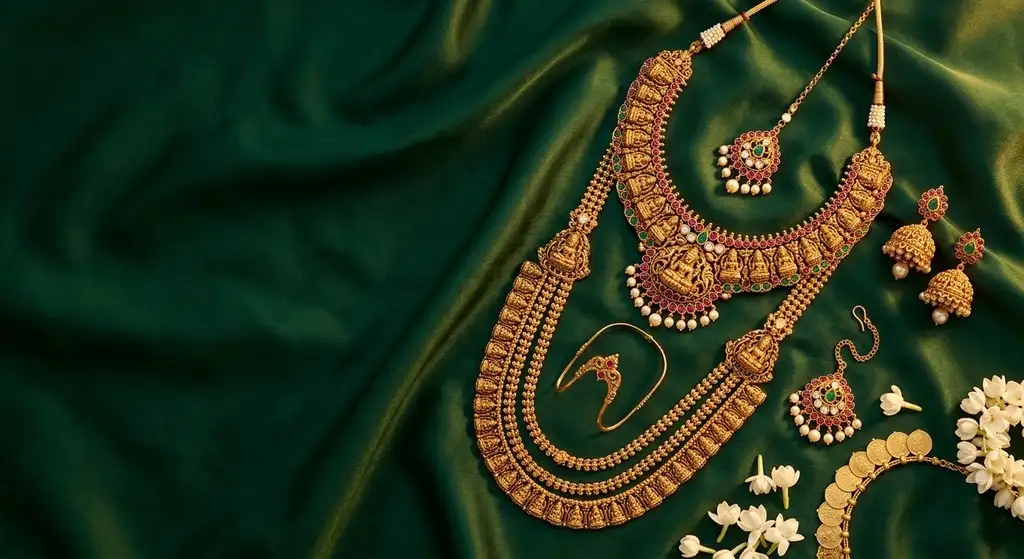
If you've ever watched a South Indian bride get ready, you'll know it isn't one necklace and a pair of earrings — it's a whole system. Waist belt, hair chain, layered haars, a choker, bangles stacked up both arms, sometimes even jewelled anklets and a nose ring. Every piece has a name, a place, and usually a regional origin, and figuring out what you actually need (versus what you're seeing on a heavily styled Instagram bride) is where most people get stuck.
This is meant to make that easier. What a full bridal set is actually built from, how Tamil, Telugu, and Malayali traditions differ, what to prioritise if you're working with a budget, and how to plan the jewellery around the different functions of the wedding rather than just the main ceremony.
What's Actually in a "Full Set"
When people say "full bridal set," they usually mean some combination of the following — not necessarily all of it, and rarely all in the same metal or motif unless it's an heirloom set passed down as one.
The Necklace Layers
Bridal necklaces are almost never worn solo. The typical stack is a short choker sitting at the collarbone, a medium-length necklace below it, and a long haar reaching the chest or waist. Sets like the Vedika heritage gold choker or the Yaanishi temple gold long haar are designed to be worn this way — as one layer in a stack, not the whole outfit on their own.
The Mangalsutra
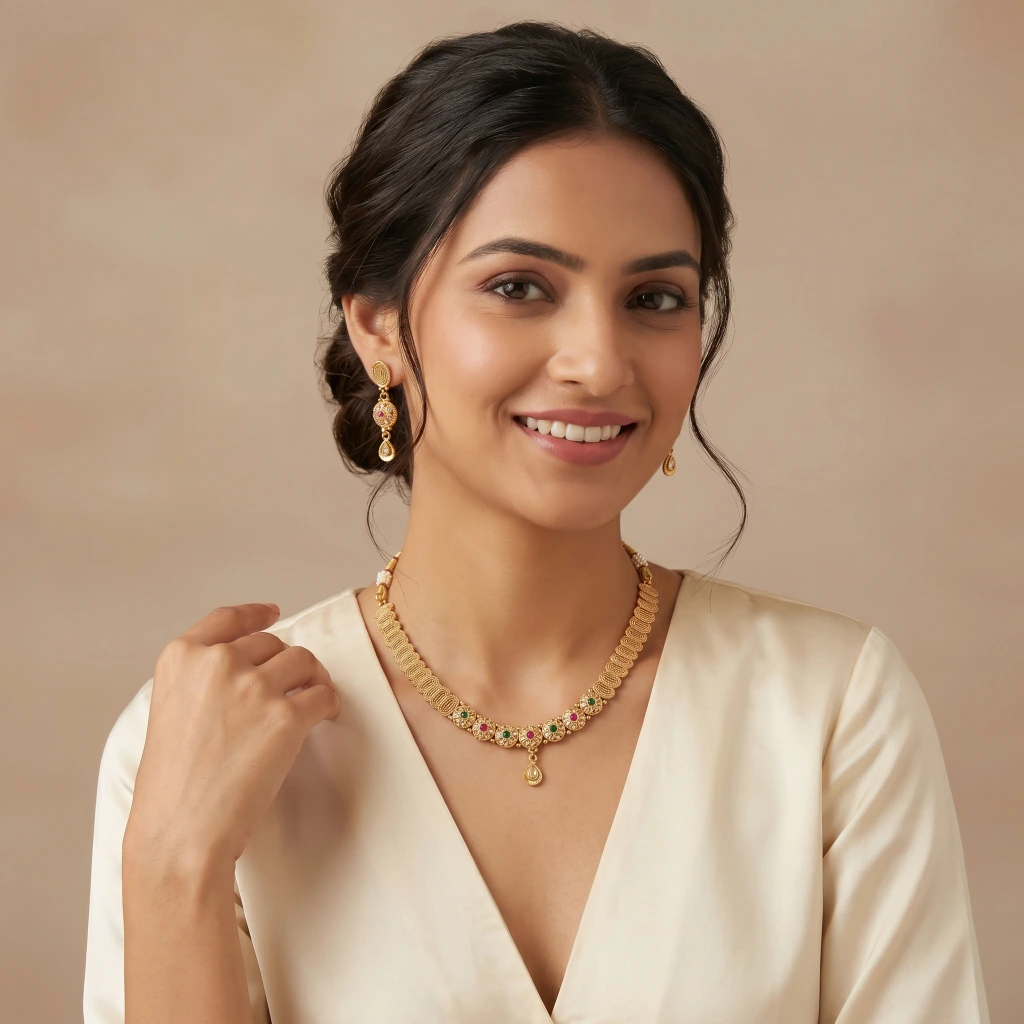
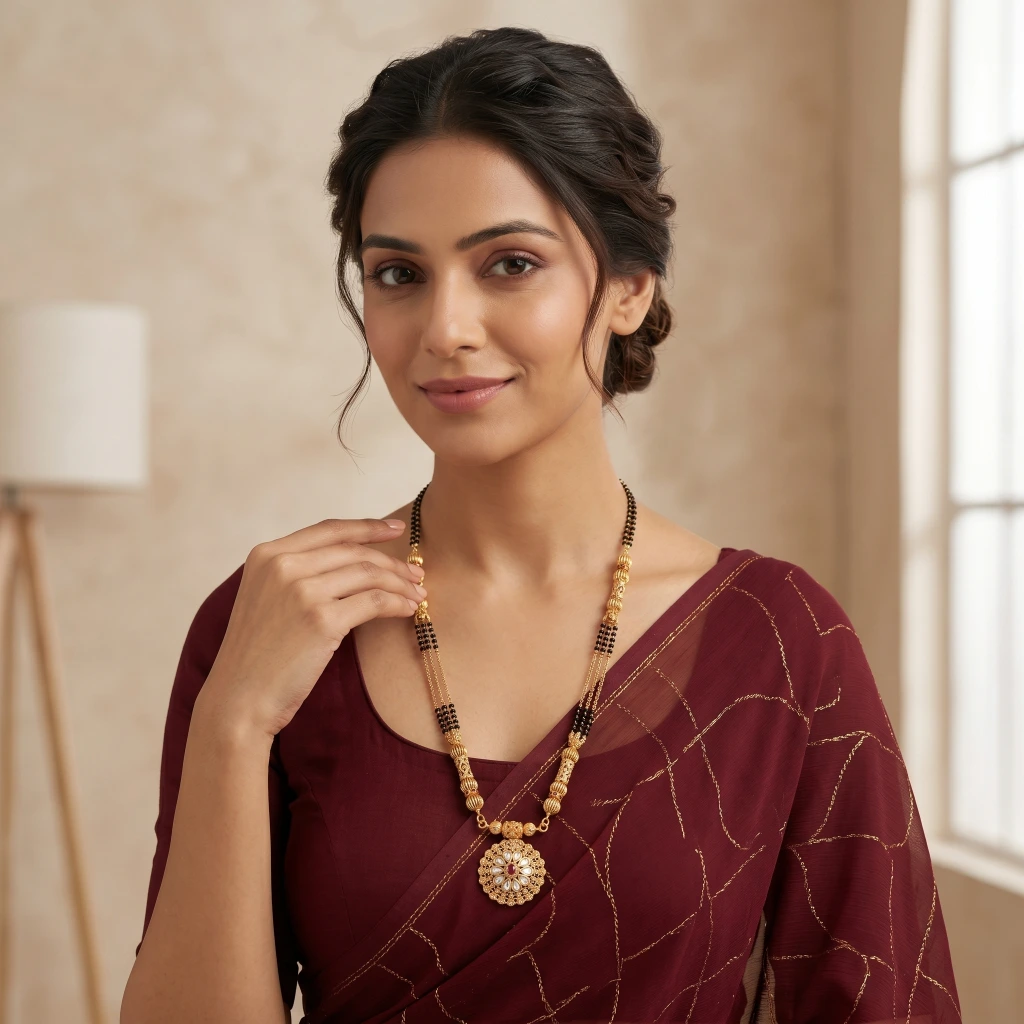
Separate from the decorative necklaces, the mangalsutra carries the actual ritual weight of the wedding. Styles vary a lot by region and family — some are simple black-bead strands with a gold pendant, others closer to a full necklace, like the Pari heritage gold long mangalsutra or the more compact Inaya radiant gold pearl mangalsutra. This is usually the one piece a bride keeps wearing daily after the wedding, so it's worth choosing something she'll actually be comfortable in long-term, not just on the day.
Jhumkas and Chandbalis
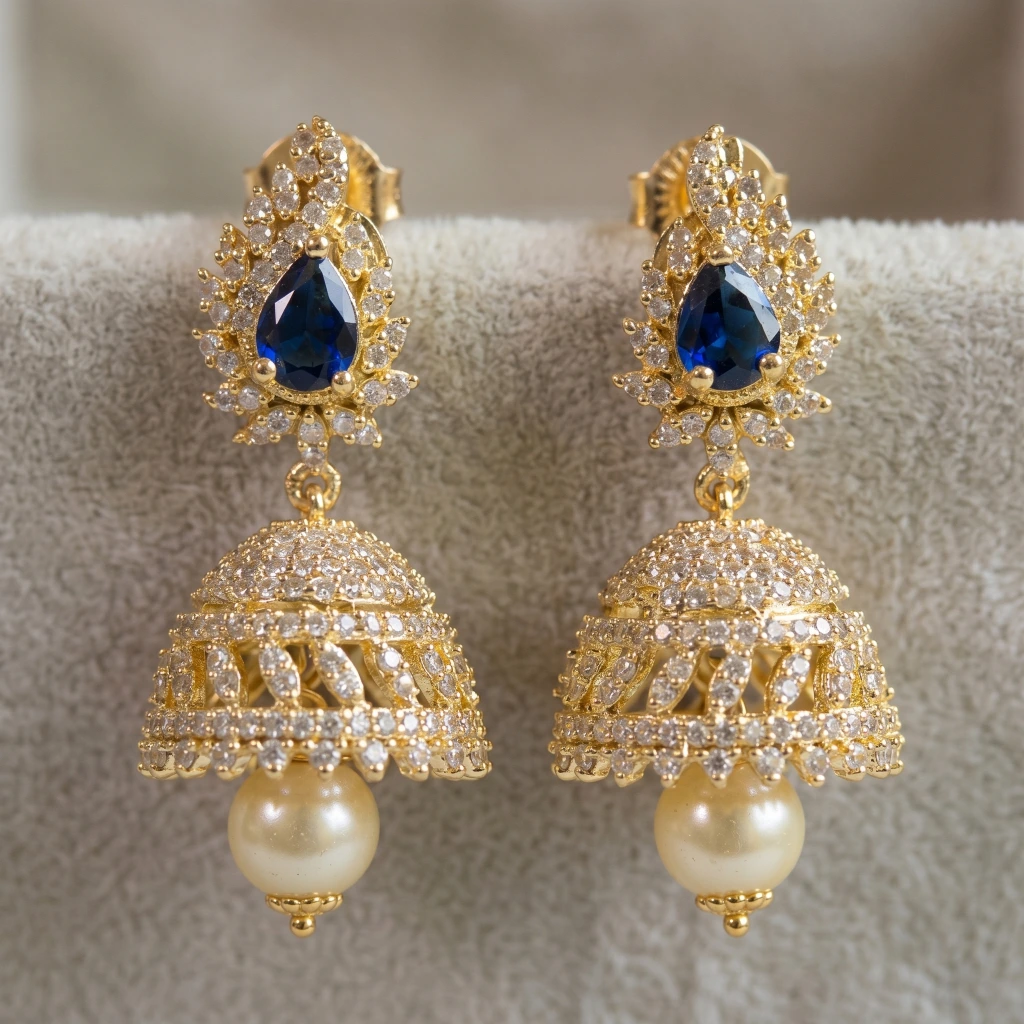
Large, tiered earrings are non-negotiable at a South Indian wedding — they're meant to be visible from a distance and to move with the bride through the ceremony. Pieces like the Azure royale heritage jhumkas or the Saanvi maroon antique filigree jhumkas sit at the scale most bridal looks call for.
Maang Tikka and Jadai Billai
The maang tikka sits at the parting, usually with a hanging deity or floral drop. Less universally known outside South India is the jadai billai — a long, elaborate hair ornament worn down the braid, often paired with a temple juda pin at the top like this Lakshmi motif juda pin. QDORA's juda pins collection has a few options at different scales, from subtle to full bridal.
Vanki (Armlet)
Worn on the upper arm rather than the wrist, the vanki is one of the more distinctly South Indian pieces — you won't see it as often in North Indian bridal sets. It's usually chosen to coordinate with the necklace's motif rather than bought as a standalone piece.
Bangles and Kada
Brides typically wear a stack rather than a single bangle — sometimes a dozen or more per arm, mixing gold-toned bangles with red and green glass or lac bangles depending on region. QDORA's bangles collection and bracelets collection both have gold-toned pieces that work well layered for this.
Oddiyanam (Waist Belt)
A broad, ornate belt worn at the waist over the saree, the oddiyanam is one of the most photographed pieces at a Tamil or Telugu wedding and one of the most expensive to source in real gold — which is exactly where a well-made plated version earns its keep, since it's worn for a few hours and photographed extensively rather than worn daily afterward.
Payal and Metti (Anklets and Toe Rings)
Traditional anklets, often called payal, and toe rings called metti complete the look below the saree hem. Pieces like the gold multi-stone pearl traditional payal follow the classic broad, jingling anklet style rather than a slim modern chain.
Nose Ring (Mookuthi)
A stud or small hoop worn on one side of the nose, sometimes paired with a chain connecting to the ear. It's optional in most modern bridal looks but still a strong regional signature, especially in Tamil Nadu.
How the Regions Differ
It's easy to lump "South Indian bridal jewellery" into one look, but Tamil, Telugu, and Malayali bridal traditions each lean differently.
Tamil Nadu
Heavy on temple motifs, kemp stones, and the oddiyanam. Layered necklaces, a prominent vanki, and stacked bangles are the norm, usually in a deep red-and-green colourway against a Kanjeevaram silk saree.
Andhra Pradesh and Telangana
Known for guttapusalu-style beaded necklaces and antique nakshi work — engraved gold rather than heavy stone-setting. The overall look tends to be slightly less stone-dense and more focused on the metalwork itself, as in pieces like the Mayura heritage antique gold haar set.
Kerala
A different palette entirely — palakka jewellery with its flat, foil-backed stones, worn against the gold-bordered Kasavu saree rather than a heavily coloured silk. It's a more restrained bridal look overall, with fewer, more deliberate pieces rather than full-body layering. If that's specifically your look, our Kasavu saree jewellery guide goes into more detail, and our temple jewellery buying guide covers palakka and the other temple styles in more depth if you want to understand the material side before you buy.
Choosing a Set Without Overspending
Real gold bridal sets can run into lakhs, which is exactly why most brides today — even ones from families with real gold jewellery — mix heirloom pieces with well-made plated ones for the parts that don't need to be gold. A few ways to think about where to spend:
- Prioritise what's closest to the camera. Necklace, earrings, and maang tikka get photographed the most — put your budget there first.
- The oddiyanam and payal are good places to save. They're worn for a few hours, photographed at a distance, and a well-plated version reads just as well in photos as solid gold.
- Match, don't mix metals randomly. If you're combining an heirloom necklace with newly bought earrings and bangles, check the gold tone is close enough that it doesn't look mismatched under wedding lighting.
- Buy the mangalsutra to last, not just to photograph well. It's the one piece worn daily afterward — comfort and durability matter more here than anywhere else in the set.
- Rent or borrow the heaviest single-occasion pieces — like an elaborate jadai billai or a full temple choker-and-haar set — if you know it won't get worn again, and put the savings toward pieces you'll actually wear post-wedding.
Styling It Across the Wedding Functions
Haldi
Turmeric ceremonies call for something simpler and turmeric-resistant — a single strand necklace, small studs, and bangles, nothing elaborate that you'd worry about staining or losing under the mess of the ceremony.
Mehndi and Sangeet
This is where you can go colourful and a little less traditional — jhumkas and a statement necklace in bright stones, without the full layered bridal weight, since you'll be dancing and moving around far more than at the main ceremony.
Muhurtham / Wedding Ceremony
The full set comes out here — layered necklaces, oddiyanam, vanki, jadai billai, stacked bangles, the works, coordinated with the Kanjeevaram or silk saree.
Reception
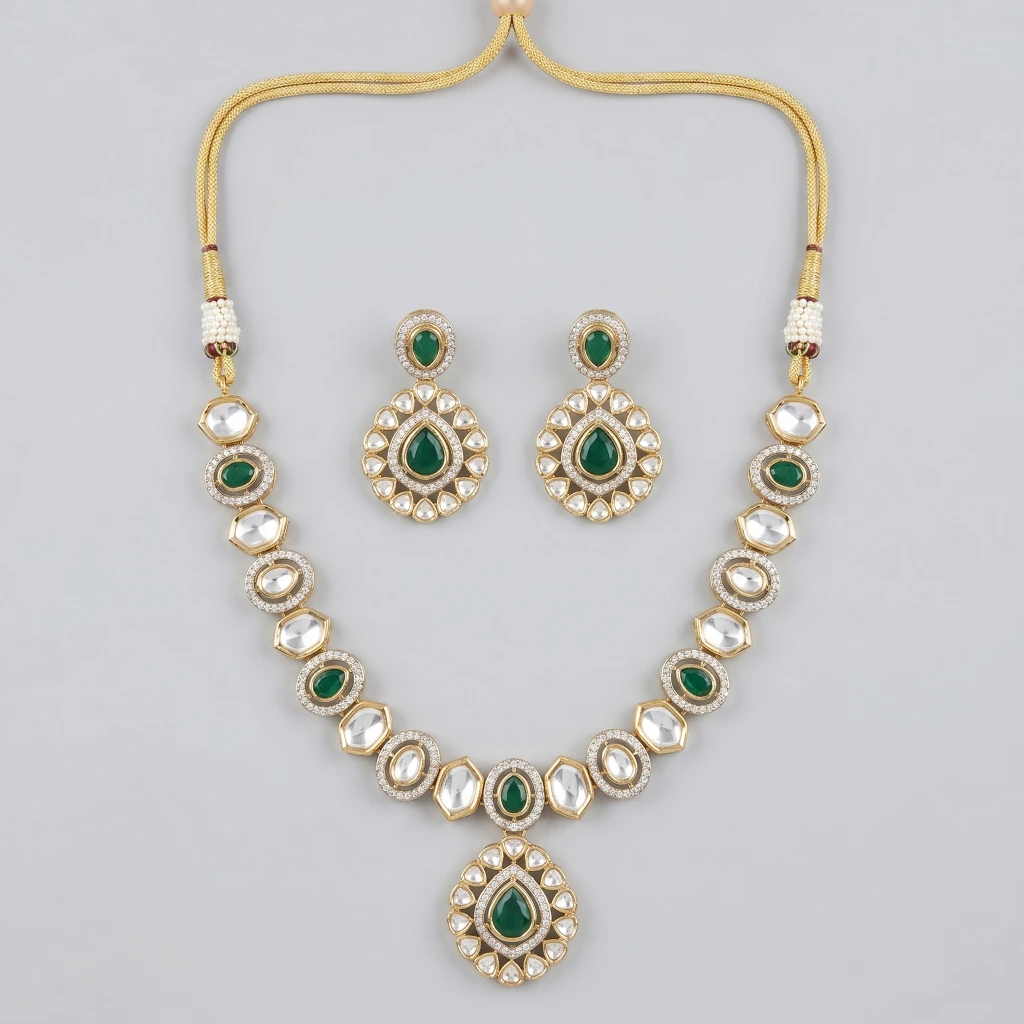
Often a shift toward a single statement piece rather than the full stack — a heavier necklace like the Ruby Kundan necklace set or the Celeste Emerald Kundan necklace set worn with a lehenga or a different silk saree, letting the outfit and one strong piece carry the look instead of every layer from the ceremony.
Caring for Bridal Jewellery Before and After
- Try the full set on together before the wedding day, not just piece by piece — some combinations look heavier or sit differently once layered.
- Have someone assigned to collect and store pieces as they come off during the day; bridal jewellery gets lost far more often between functions than during them.
- Store the oddiyanam and any large necklace flat, not folded, to avoid bending the metal.
- Clean pieces with a soft, dry cloth before storing — turmeric, sandalwood paste, and sweat from a long wedding day are harder to remove the longer they sit.
Build Your Bridal Set at QDORA
Explore full bridal necklace sets, jhumkas, and haaram pieces designed to layer together, or pair them with an authentic GI-protected Kasavu saree.
Shop Bridal Jewellery Sets → View Mangalsutra Designs →
✔ Free shipping above ₹999 ✔ Easy returns
Frequently Asked Questions
How many pieces are actually in a full South Indian bridal set?
There's no fixed number, but a fairly complete set typically includes a layered necklace stack, mangalsutra, jhumkas, maang tikka, jadai billai, vanki, bangles, oddiyanam, and payal — nine to ten distinct pieces, though many brides skip one or two depending on region and personal preference.
Do I need real gold for a wedding, or is plated jewellery acceptable?
Plenty of modern brides mix both — real gold for a few key heirloom or long-term pieces like the mangalsutra, and good-quality one-gram gold plated pieces for the larger, more decorative items like the oddiyanam or a second necklace layer. Nobody can tell the difference in photographs, and it meaningfully changes the budget.
What's the difference between a vanki and a regular armlet?
A vanki is specifically the upper-arm ornament worn as part of traditional South Indian bridal dressing, usually with a distinct curved or leaf-shaped design that sits snugly above the elbow — it's a more specific, regionally rooted piece than a generic armlet.
Should the jewellery match the mangalsutra's metal tone?
It helps, but it doesn't have to match exactly, since the mangalsutra is often worn continuously afterward while the rest of the set is occasion-specific. A close gold tone across the visible pieces on the day is more important than an exact match to a piece that's partly hidden under the saree pallu anyway.
Can the same jewellery be reused for other functions after the wedding?
Yes, especially the individual pieces rather than the full layered stack. A single necklace from the set, the jhumkas, or the bangles all work well on their own for future weddings, festivals, or family functions.