
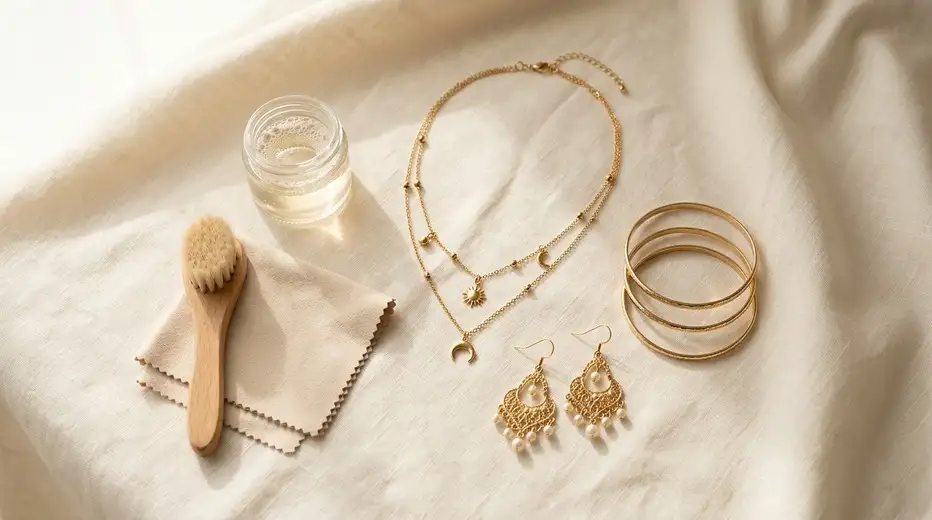
You wear a new pair of earrings a handful of times and the plating already looks dull. Or worse – you notice a greenish tinge where a ring touches your skin. It's the single most common complaint with artificial jewellery, and the good news is that almost all of it is preventable with a few small habits, not expensive maintenance.
This guide covers exactly why artificial jewellery tarnishes or turns black/green, and the simple daily and weekly habits that keep imitation jewellery looking new for years – whether it's from QDORA or anywhere else.
Why Artificial Jewellery Tarnishes in the First Place
Most fashion jewellery is base metal (brass, copper alloy, or zinc alloy) plated with a thin layer of gold, rhodium, or silver. That plating reacts with three things: moisture, sweat/skin oils, and airborne chemicals like perfume or sulphur in the air. The greenish mark some people get isn't dirt – it's a chemical reaction between the base metal and skin acidity, and it happens more to some skin types than others regardless of jewellery quality.
| Cause | What It Does | Prevention |
|---|---|---|
| Water & sweat | Speeds up plating wear, causes dullness | Remove before showering, swimming, workouts |
| Perfume & lotion | Chemical reaction darkens plating | Apply perfume first, jewellery last |
| Air exposure | Oxidises plating over time | Store in airtight pouch or box |
| Skin acidity | Green/black marks on skin contact | Clear nail polish coat on inner surface |
1. Take It Off Before Water Touches It
This is the single biggest factor in how long plating lasts. Remove rings, bangles, and earrings before showering, washing dishes, swimming, or working out. Water combined with soap or chlorine is the fastest way to strip a thin gold or rhodium layer down to the base metal underneath.
2. Perfume and Lotion Go On First, Jewellery Goes On Last
Perfume, deodorant, and hair spray all contain alcohol and chemical compounds that react with metal plating and dull it fast. Make it the last step of getting ready, not the first – spray perfume, let it settle for a minute, then put your jewellery on.
3. Wipe It Down After Every Wear
Before putting a piece away, wipe it gently with a soft, dry microfibre cloth to remove sweat, oils, and skin contact residue. This one 10-second habit, done consistently, does more for longevity than any occasional deep clean.
4. Store It Properly – Separately and Airtight
Don't toss pieces loose into one box where they tangle and scratch each other. Store each piece separately in a soft pouch or a lined jewellery box, ideally with a silica gel sachet to control moisture. Keeping air exposure low significantly slows down oxidation and tarnishing.
💡 Quick tip: If a piece touches your skin and leaves a green or black mark, don't assume it's low quality – it's often just skin chemistry. A thin coat of clear nail polish on the inner surface (the part touching skin) creates a barrier and stops this on future wears.
5. Clean It the Right Way – Never With Harsh Chemicals
Skip toothpaste, baking soda scrubs, and jewellery-cleaning liquids made for real gold or silver – they're often too abrasive for thin plating. Instead:
- Mix a drop of mild soap into lukewarm water
- Dip a soft cloth or cotton bud, not the jewellery itself, and gently wipe
- Dry immediately and completely with a soft cloth – never air-dry
- For stones or beads, avoid soaking; wipe around them instead
6. Take It Off Last, Put It On First
A simple rule: jewellery should be the last thing you take off at night and, along with point 2 above, one of the last things you put on when getting ready. This minimises the time it spends in contact with skin oils, sweat, and product residue.
Quick Care Checklist
- Remove before water contact – shower, swim, wash dishes, workout
- Apply perfume/lotion before putting jewellery on, not after
- Wipe with a dry soft cloth after every wear
- Store separately in an airtight pouch or lined box
- Clean only with mild soap and water, never harsh chemicals
- Use a clear nail polish barrier coat if you're prone to skin marks
Shop Fashion Jewellery at QDORA
All QDORA pieces come with plating details listed on the product page, so you know exactly what you're caring for.
✔ New arrivals every week ✔ Free shipping above ₹799
Frequently Asked Questions (FAQ)
Why does my artificial jewellery turn black or green?
It's usually a reaction between the base metal underneath the plating and moisture, skin acidity, or chemicals like perfume – not a sign of poor quality. It affects some skin types more than others regardless of the piece.
How often should I clean artificial jewellery?
A quick dry-cloth wipe after every wear, and a gentle soap-water clean every 2-3 weeks if worn regularly, is enough to keep most pieces looking new.
Can I use jewellery cleaning liquid on artificial/imitation jewellery?
Avoid cleaners made for real gold or silver – they're often too harsh for thin plating. Mild soap and lukewarm water with a soft cloth is safer.
How do I stop rings and bangles from leaving marks on my skin?
Apply a thin coat of clear nail polish to the inner surface that touches skin. It creates a barrier between the metal and your skin and is the most common fix for this issue.
How should I store artificial jewellery to make it last longer?
Store each piece separately in a soft pouch or lined box, ideally with a silica gel sachet, rather than piled loosely together where pieces scratch each other and are exposed to more air.