
Every year around Onam, the same question comes up in our inbox: "Is this saree really handloom, or just a cotton saree with a gold border printed on?" It's a fair question. Kerala's Kaithari and Kuthampully weaving traditions are centuries old, but the market is full of power-loom copies wearing the same kasavu look without any of the actual craft behind it.
So before we get into our Onam saree collection, let's answer that question properly — because knowing what you're buying matters more than the marketing around it.
What Actually Makes a Saree "Authentic Kaithari"
Kaithari simply means handloom in Malayalam. It's not a brand or a specific design — it's a weaving method. A genuine Kaithari saree is woven on a pit loom, by hand, thread by thread, often by a weaver who learned the craft from a parent or grandparent. That process is slow, which is exactly why it can't be faked cheaply.
Here's the part most guides skip: a real handloom saree isn't perfectly uniform. Run your hand across the fabric and you'll feel tiny variations in the weave — a slightly thicker thread here, a small shift in tension there. That's not a flaw. That's the human hand showing through. A power-loom saree, by contrast, feels flat and identical from end to end, because a machine doesn't make mistakes the way a person does.
The other giveaway is the border. A true kasavu border has weight and texture you can feel with your fingers — it's woven into the fabric, not printed or pasted on top. If the gold sits flush and glossy against the cloth with no texture at all, it's very likely machine work.
Kuthampully — The Village Behind Kerala's Finest Cotton Sarees
Kuthampully is a small weaving town in Thrissur district, and it's where some of Kerala's most detailed handloom sarees are still made today. What sets a Kuthampully cotton saree apart from a standard Kaithari saree is the border work — weavers here are known for intricate temple, peacock, and floral motifs woven directly into the pallu and border, a skill that takes years to master.
If you've ever wondered why some Kerala sarees cost noticeably more than others, this is usually why. A plain kasavu border might take a day or two to weave. A detailed Kuthampully border with temple motifs can take considerably longer, because every motif is worked in by hand as the weaving progresses, not added afterward.
Our Onam Saree Collection
We've kept this year's Kerala saree Onam edit focused — a handful of sarees we're genuinely confident in, rather than a long catalogue padded out for the season.
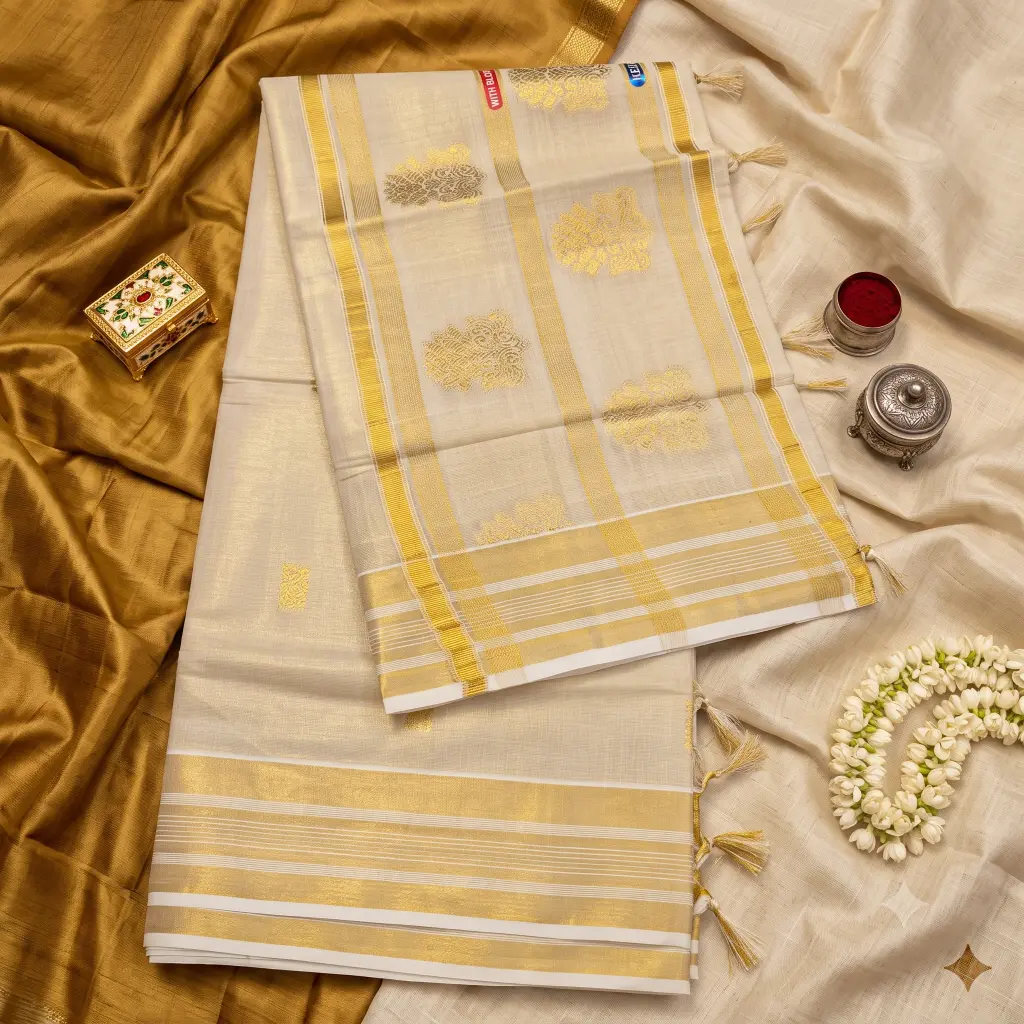
The Golden Butta Embroidered Kasavu Saree is a good starting point if you want something festive without going overboard — the butta work adds detail across the body of the saree, not just at the border.

For a slightly more traditional finish, the Golden Kasavu Tissue Saree has that classic tissue sheen Kerala sarees are known for — it photographs beautifully under the kind of warm evening light you get during Onasadya.
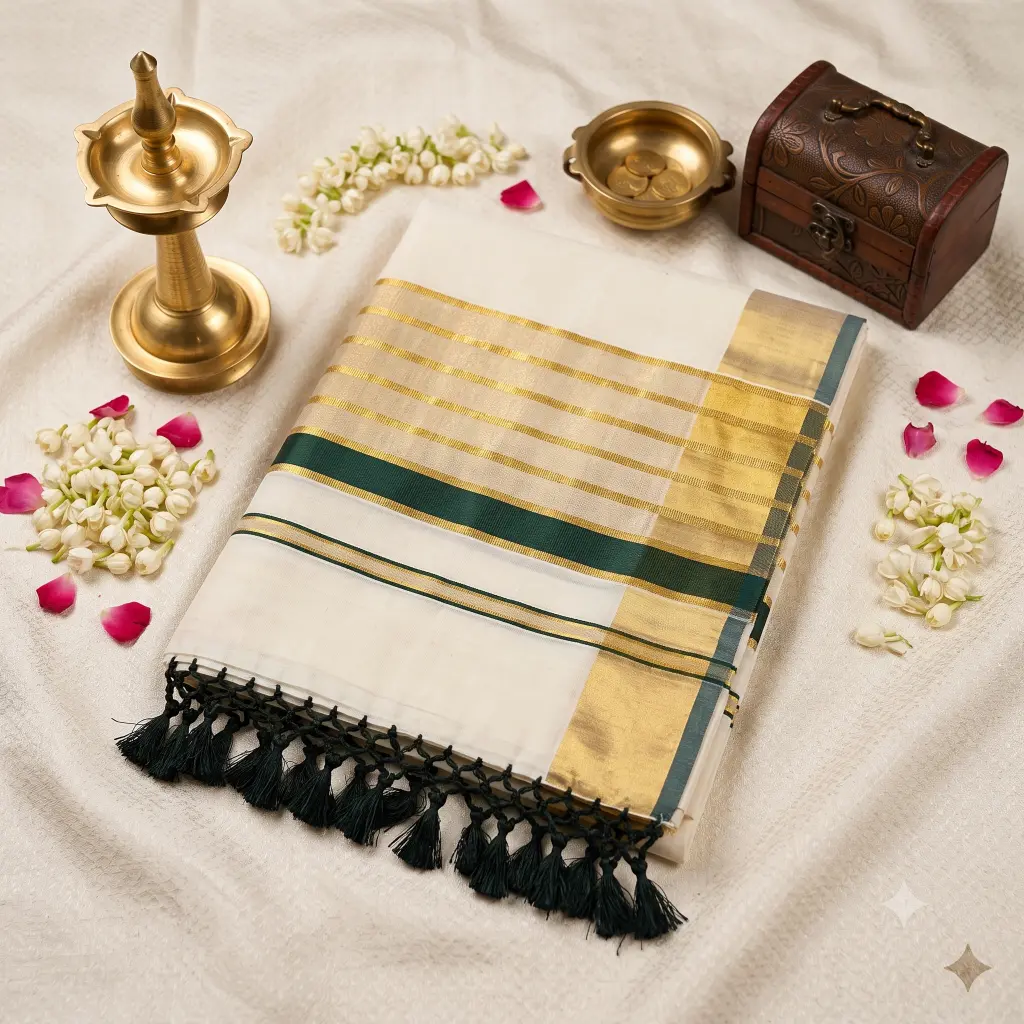
If you want a Kaithari saree that isn't the usual off-white and gold, the Kerala Kasavu Saree with Green Border is worth a look. The green border is a small departure from tradition that still feels appropriate for Onam, and it's one of the more accessible pieces in the collection.
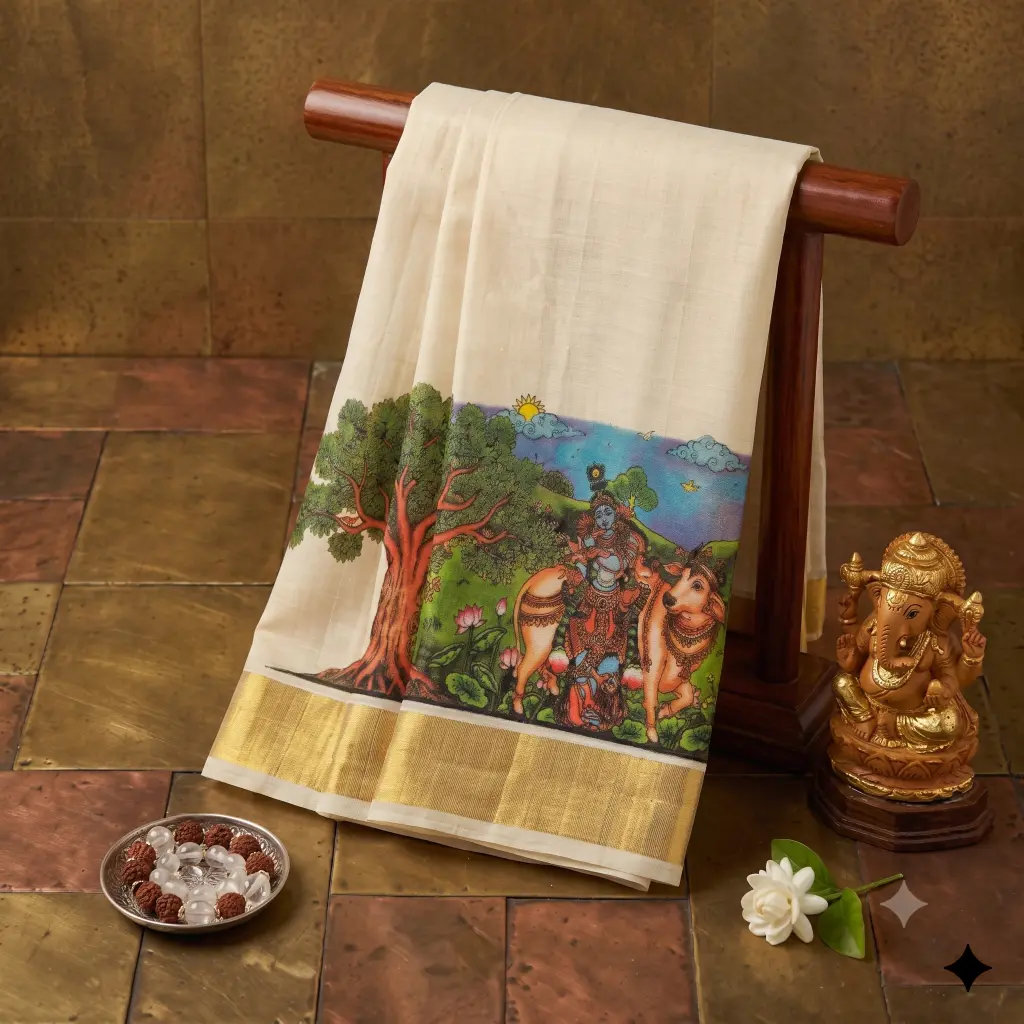
For something with a story on the fabric itself, the Krishna Kasavu Cotton Saree features a hand-painted Krishna motif — a nice choice if you're attending temple functions or want a saree with a bit more visual narrative.
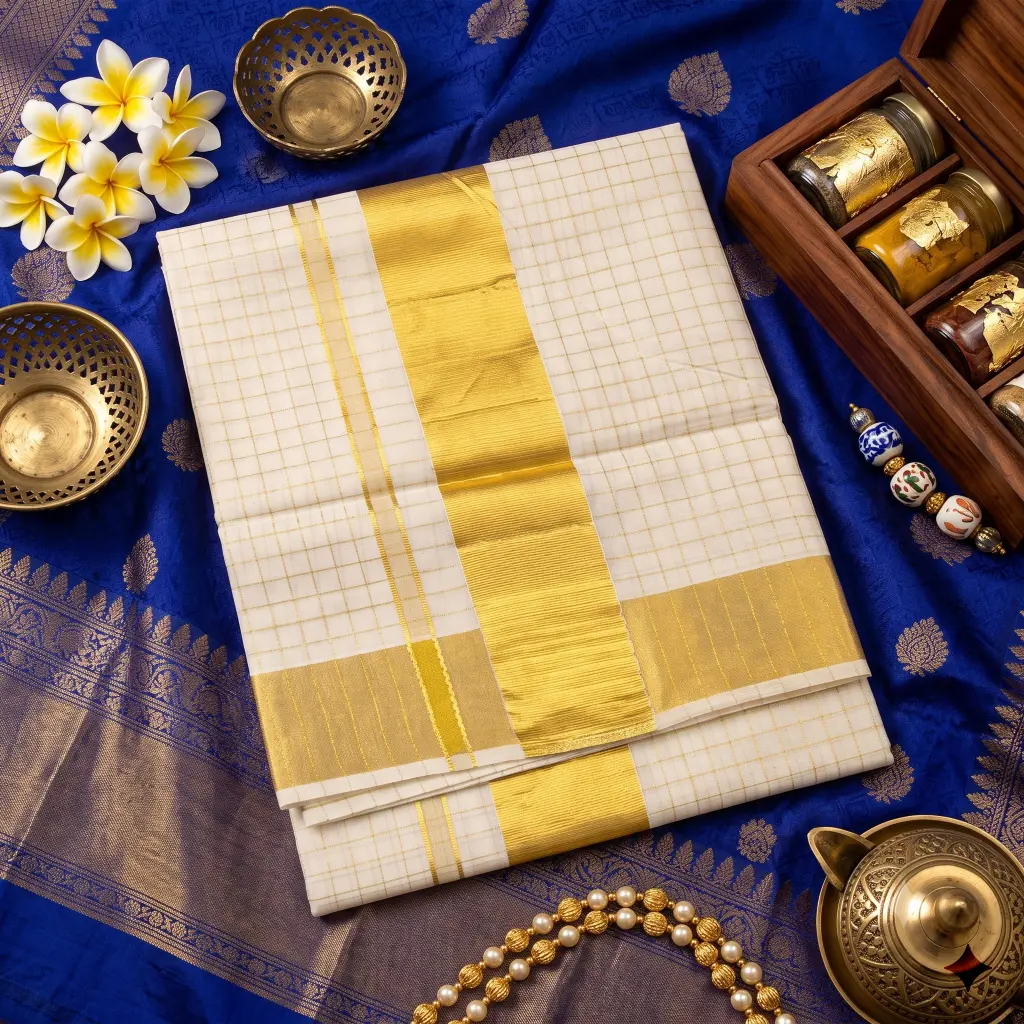
And if you prefer a more structured, contemporary pattern over the usual plain field, the Royal Offwhite Gold Checkered Saree brings a checkered weave into the classic off-white-and-gold palette.
Choosing the Right Saree for Each Onam Moment
Onam isn't a single event — it stretches across a morning of Pookalam-making, a mid-day Onasadya feast, and evenings of Thiruvathira and family gatherings. Each part of the day makes different demands on what you're wearing.
For the morning — laying out flowers, moving between the kitchen and the courtyard — a lighter Kaithari cotton saree with a simple border makes more sense than anything heavily worked. You'll be on your feet and around water and petals, and a lighter cotton drapes more forgivingly through all of that.
By the time Onasadya is served, most families have changed into something a little richer. This is where a Kuthampully cotton saree with a detailed border earns its place — it holds up well in photographs, and the weight of the fabric feels right for a sit-down feast.
For Thiruvathira and evening cultural programs, go back to something that moves easily. The traditional off-white and gold combination has stayed the default for dancers for a reason — it doesn't restrict movement, and it still looks unmistakably festive under stage lighting.
Caring for a Handwoven Cotton Saree
A genuine Kaithari or Kuthampully saree is a slower purchase than most clothing, so it's worth treating it that way. Hand wash it separately for the first two or three washes — this protects the zari border before the fabric has fully settled. Keep it out of direct sunlight while drying, since prolonged sun exposure dulls the gold tone over time. When storing it, use a cotton or muslin wrap instead of plastic; cotton needs to breathe, and plastic traps moisture that can eventually damage the fibres. When you're ready to wear it again, iron it on medium heat while it's still slightly damp — that's what gives it the crisp finish you see in the store.
Our Onam Saree Collection at a Glance
Five sarees, five different finishes — from a classic Balaramapuram handloom to a hand-painted Krishna motif. Browse the collection below or explore the full range.
Frequently Asked Questions
What's the actual difference between a Kaithari saree and a Kuthampully saree?
Kaithari is the general term for any Kerala handloom saree. Kuthampully is a specific style from the weaving village of the same name, known for detailed temple and floral motifs woven into the border — so every Kuthampully saree is a Kaithari saree, but not every Kaithari saree is a Kuthampully saree.
Are QDORA's Onam sarees genuinely handloom?
Our Kerala saree collection is built around authentic kasavu weaving — pure cotton and cotton-blend fabrics with woven, not printed, borders. Each product page lists the specific weave and border details for that saree.
Which saree should I pick if I'm buying just one for Onam?
If you want one saree that works across the whole day, look for a mid-weight Kaithari cotton saree with a moderate border — heavy enough for Onasadya photos, light enough to wear comfortably from morning to evening.
Do handloom cotton sarees need any special first wash?
Yes — hand wash separately in cold water for the first few washes. This keeps the zari border from bleeding or catching dye from other fabrics before the saree has settled.
Can I gift a Kaithari or Kuthampully saree for Onam?
Yes, and it's one of the more meaningful gifts you can give during the season — a handwoven Kerala saree tends to be worn and kept for years, unlike most festival gifting.